
Tsavo National Park animals at a glance
Tsavo is two national parks, Tsavo East and Tsavo West, and together they cover about 22,800 km². Tsavo East has open, semi-arid plains and acacia bush. Tsavo West is volcanic and hillier, with springs and lava flows. The animals you can look for differ a little between them, and no park offers a guarantee. A good game drive gives you good chances at elephants and sometimes at lions, and anything beyond that is a bonus.
This page names the main groups, gives the census figures with their year and explains how to read them. If you are choosing between the parks first, the Tsavo East or West comparison helps, and the Tsavo safari page covers routes and trip lengths.
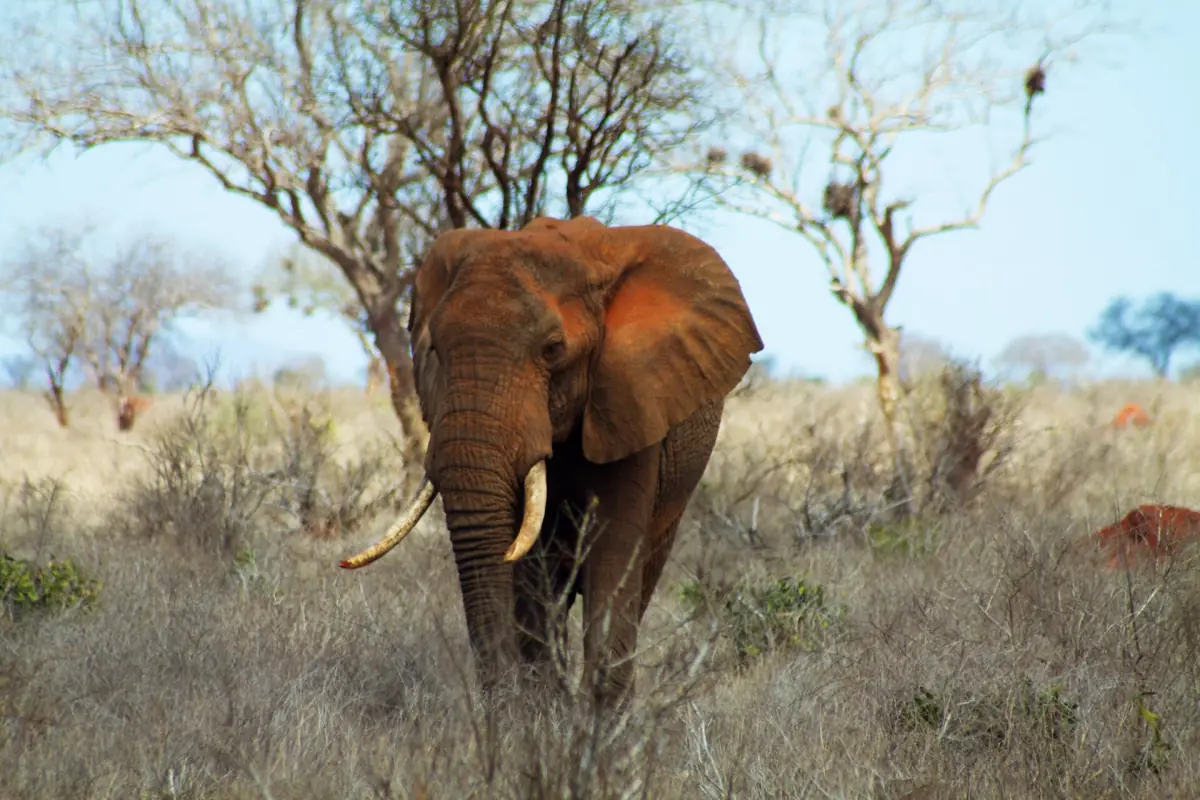
Red elephants: why Tsavo's elephants look red
The colour comes from the ground, not from a special kind of elephant.
The red coat is dust. Tsavo's soil is rich in iron, and the elephants cover themselves with it. Red elephants are not a separate species, only elephants with a red dust coat. In Tsavo East a dusted herd can stand out against dry golden grass. Photos of the same herd can look different depending on how much dust it carries.
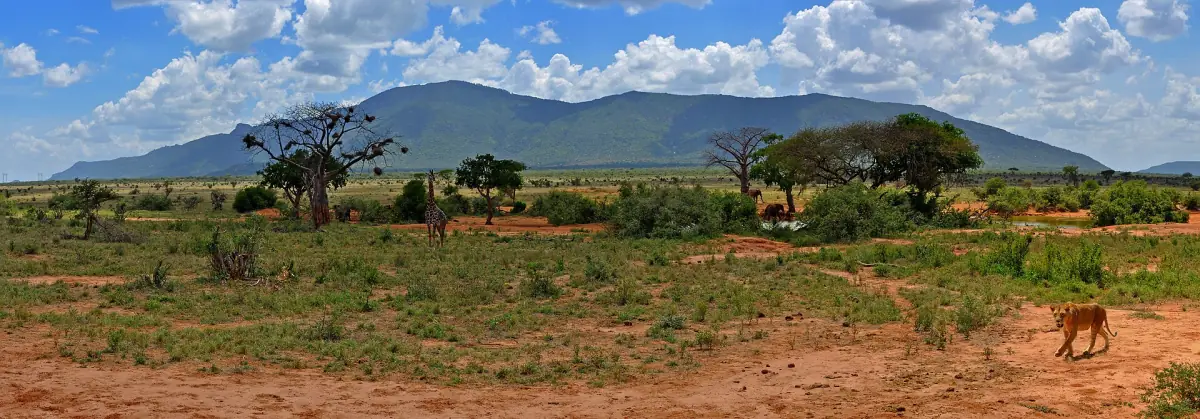
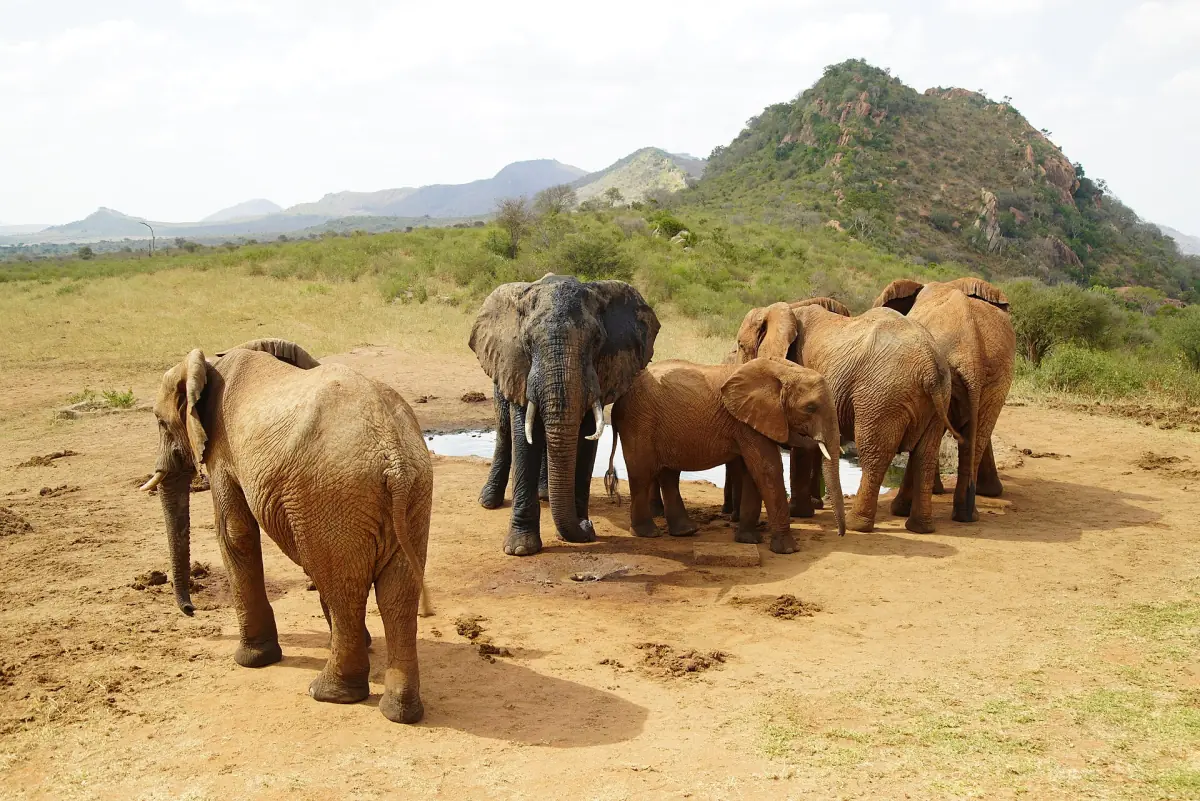
Our pick: a day of game drives in Tsavo East
A full day of game drives in Tsavo East with a guide; what you see varies from drive to drive, and no sighting is guaranteed.
Hand-picked tours, booked through GetYourGuide. Prices are indicative starting prices in US dollars (as of October 2026). Tap a tour for live availability and the current price in your currency.
Tsavo wildlife safaris
Game drives in Tsavo East and Tsavo West with live prices and availability.
How many elephants live in Tsavo?
The national wildlife census report of 2025 counts 17,266 elephants in the Tsavo ecosystem. The figure comes from an aerial count in 2024/25. The census of 2021 gave 14,964, so the number is higher than before.
Read the number carefully. It covers the whole ecosystem and not only Tsavo East or only the parts that visitors can reach. It does not tell you how many elephants you will meet in a morning. Herds move with water and food, and a day with many elephants can follow a day with few.
If you like elephants and plan to visit more than one park, Amboseli's elephants are a well-known comparison.
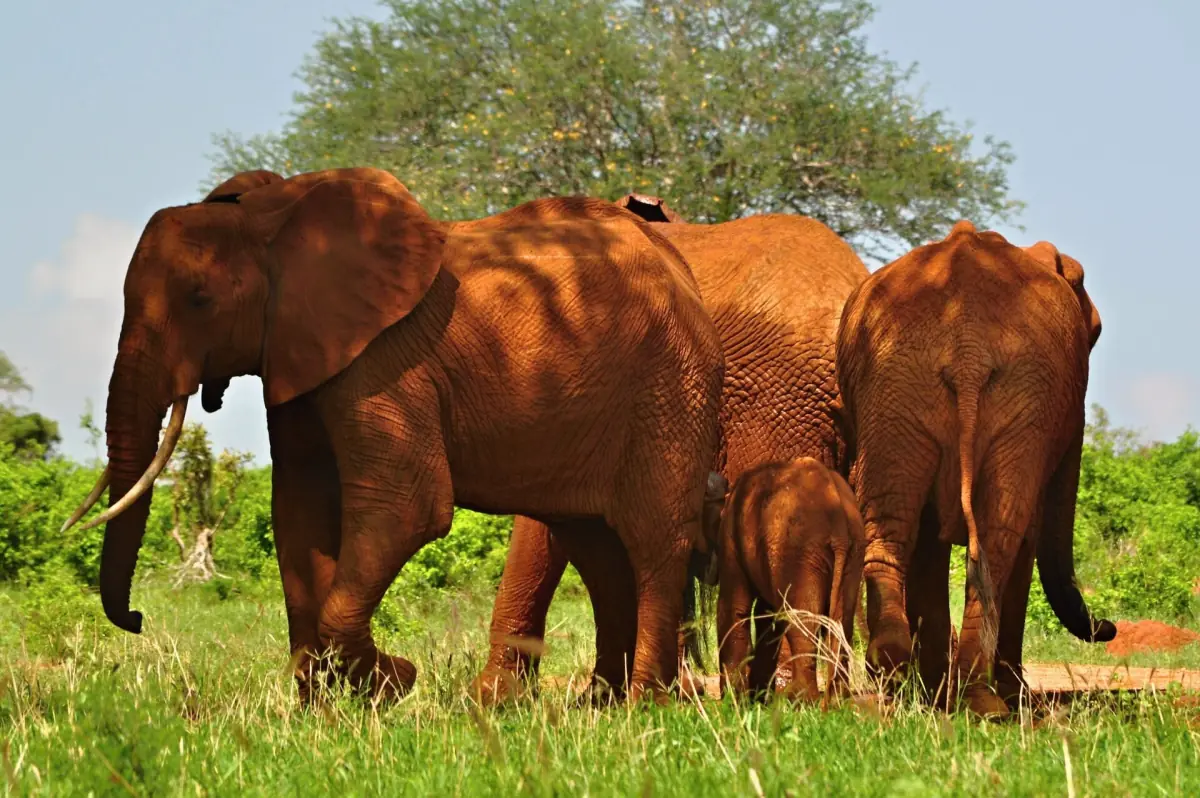
Tsavo East animals and Tsavo West animals
Where each group is easiest to look for.
| Animal | Tsavo East | Tsavo West | What to know |
|---|---|---|---|
| Elephants | Red dust on open plains | Herds at waterholes | Counted for the whole ecosystem, 17,266 in 2024/25 |
| Lions | Maneless males are known | – | Not every lion is maneless; no sighting is certain |
| Black rhinos | 31 counted in 2024 | Ngulia 142 and the IPZ 42 in 2024 | Counts from 2024; rhinos are hard to see |
| Hippos and crocodiles | – | Mzima Springs pools | See the Mzima Springs guide |
| Gerenuk, oryx, hirola | Recorded in the census area | Recorded in the census area | Aerial counts do not cover shy species fully |
For most first visits, elephants and lions are the realistic aim. Choose Tsavo East if you want open plains and Mudanda Rock, and Tsavo West if you want springs, lava and rhino country.
Lions and rhinos
The two animals people ask about most.
Lions
Maneless male lions are known from Tsavo East. The census recorded lions in the Tsavo area, but an aerial count is not a full lion population, and no figure here shows how many lions live in each park.
The man-eaters of Tsavo →Rhinos in Tsavo West
The 2024 count lists 142 black rhinos at Ngulia, 42 in the Tsavo West intensive protection zone and 31 in Tsavo East. An expanded rhino sanctuary in Tsavo West officially opened in September 2026. The expansion is not a promise of a new public drive, and the sanctuary is now larger than the old fenced Ngulia area. A large protected population does not mean easy sightings.
Tsavo West guide →Hippos and crocodiles
The pools at Mzima Springs in Tsavo West are home to hippos and crocodiles. Stay on the paths, and keep at least 20 m from animals.
Birds
The private Taita Hills Wildlife Sanctuary has recorded more than 300 bird species. That is a figure for the sanctuary and not for Tsavo East or West as a whole. See the Taita Hills guide.
Rules on a game drive
Follow them in both parks.
Distance and speed
Keep at least 20 m from wildlife. The speed limit is 40 km/h.
Stay on the road
Driving off existing roads is not allowed, and you leave the vehicle only at designated places.
No feeding, no plastic
Do not feed animals. Single-use plastic is banned in the parks.
Gate hours
Gates are open from 06:00 to 18:00 unless you stay overnight. Park fees are listed on the Tsavo park fees page.
Tsavo animals: frequently asked questions
Why are Tsavo's elephants red?
They coat themselves in dust from the iron-rich soil. The colour is not a separate species, and it fades as the dust wears off.
Will I see lions in Tsavo?
You have good chances on a game drive, but nobody can promise a sighting. Maneless male lions are known from Tsavo East.
How many elephants are in Tsavo?
The 2025 census report counts 17,266 in the Tsavo ecosystem, from an aerial count in 2024/25. The 2021 count was 14,964. The figure covers the whole ecosystem.
Can I see rhinos in Tsavo?
Rhinos live in Tsavo West and Tsavo East, but they are hard to see. The expanded Tsavo West sanctuary opened officially in September 2026, and a larger area does not mean more public viewing routes.
Which animals live in Tsavo East?
Elephants, lions and black rhinos are all counted there. Gerenuk and oryx are recorded in the census area as well. Counts do not tell you what you will see on one day.
Is this the official Tsavo site?
No. This is an independent guide and is not run by the Kenya Wildlife Service or by any safari operator.