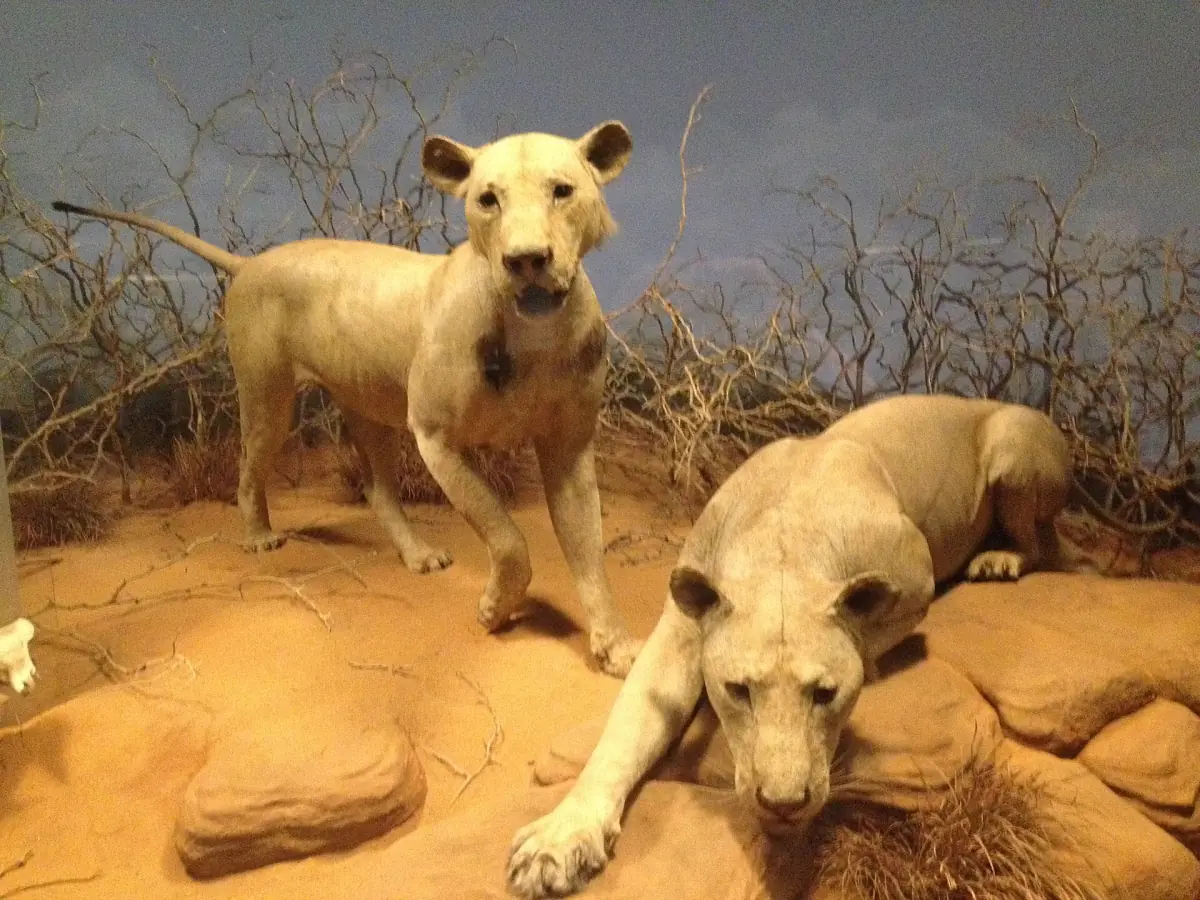
What happened at the Tsavo River in 1898
In 1898 two maneless male lions attacked people at the site where a railway bridge was being built over the Tsavo River. The railway was the Uganda Railway. The chief engineer, Lt. Col. John Henry Patterson, shot both lions at the end of the same year.
The story reached a wide audience through a book, a museum display and a film. This page keeps to what can be dated and sets the victim numbers side by side. The Tsavo River flows through Tsavo West National Park. Many travellers know the name Tsavo from this story before they know anything else about the area. If you want to see lion country yourself, the Tsavo safari tours below cover both parks, and visitors from the coast can start with Tsavo East trips from the coast.
Our pick: see the land of the Tsavo lions
This day trip from the coast takes you into both parks where the story of 1898 unfolded.
Hand-picked tours, booked through Viator. Prices are indicative starting prices in US dollars (as of October 2026). Tap a tour for live availability and the current price in your currency.
Tsavo safaris and day trips
Game drives in Tsavo East and Tsavo West with live prices and availability.
How many people did the lions kill?
The figures range from about 35 to 135, and they measure different things.
| Figure | Who gave it | What it counts |
|---|---|---|
| 135 | Lt. Col. John Henry Patterson | People he said the two lions killed |
| About 35 | An isotope study from 2009 | People the lions are estimated to have eaten |
Neither number is an exact count of everyone who died. The first is Patterson's own claim, and he was the man who shot the lions. The second is an estimate of how many people the lions actually ate. The true total of all deaths is not known, so the honest answer is a range of about 35 to 135.
The lions today and the Field Museum
You do not need to travel to Kenya to see the animals.
Preserved in Chicago
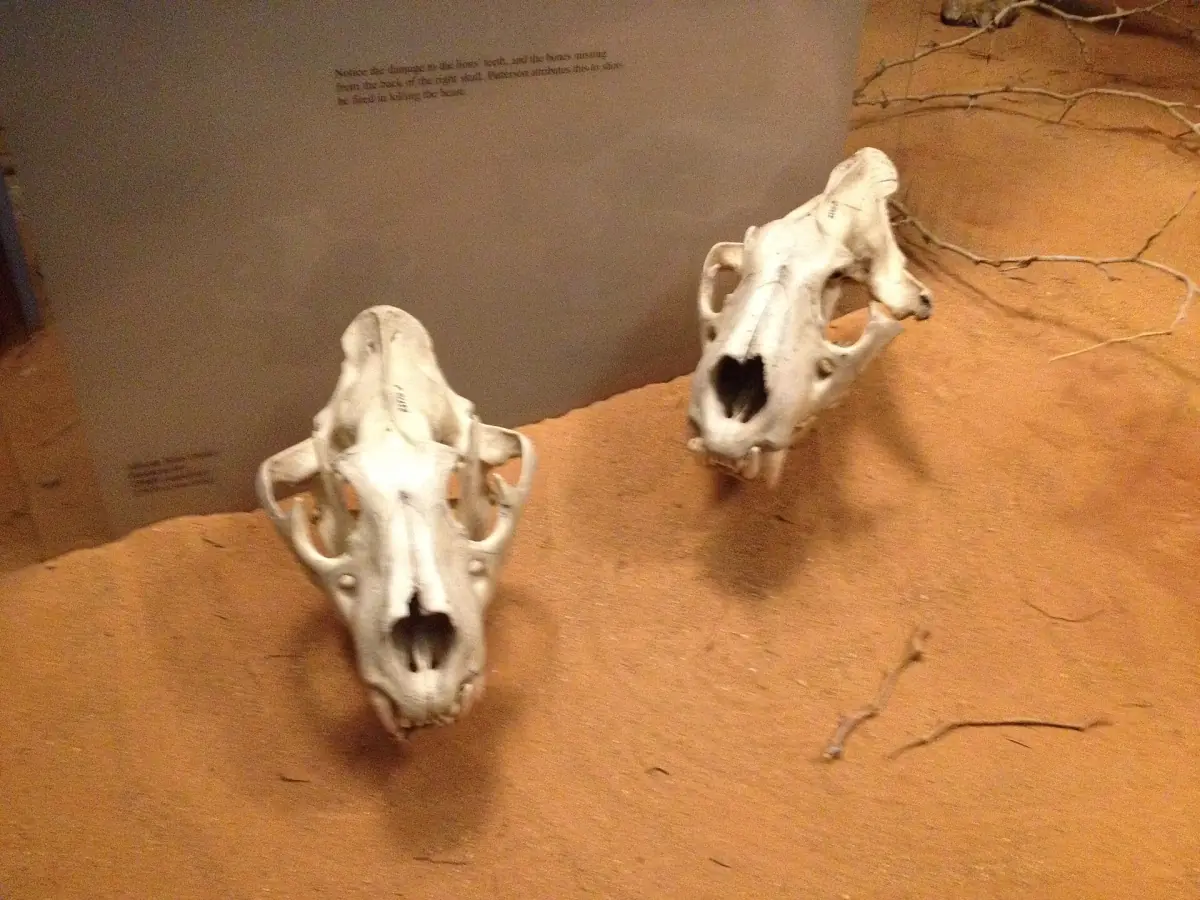
The two lions are mounted in a diorama at the Field Museum in Chicago, and their skulls are shown in an exhibition there. They are not in Kenya, and no Tsavo park gate or lodge holds them.
From rugs to museum
Patterson had used the skins as rugs. He sold them in 1925, and the lions were later mounted for display.
Maneless lions in Tsavo East
Maneless lions are known from Tsavo East. That does not mean every lion in the park lacks a mane. The Tsavo animals guide covers lions, elephants and realistic sighting chances.
The Ghost and the Darkness: the book and the film
Two works made the story famous.
The book
Patterson wrote The Man-Eaters of Tsavo and Other East African Adventures. It is his own account, so it carries his version of events and his count of 135.
The film
The 1996 film The Ghost and the Darkness is based on the story. In the film the lions are shown with manes, which differs from the maneless animals of the historical account.
Fact and drama
A film shortens events and invents scenes. Use it as an introduction to the setting, and use the dates and figures on this page for the history.
More Tsavo history
The lions are one chapter of several.
The First World War
Tsavo was also a setting of the East African campaign of the First World War.
David Sheldrick in Tsavo East
David Sheldrick started as the founding warden in 1948 and worked on conservation in Tsavo East until 1976.
Poaching and recovery
Tsavo's elephants suffered from heavy poaching and droughts for about two decades. Their numbers have recovered since 1987. This is background history and not a current poaching statistic.
Visiting Tsavo today
The parks are two separate national parks, each with its own gates.
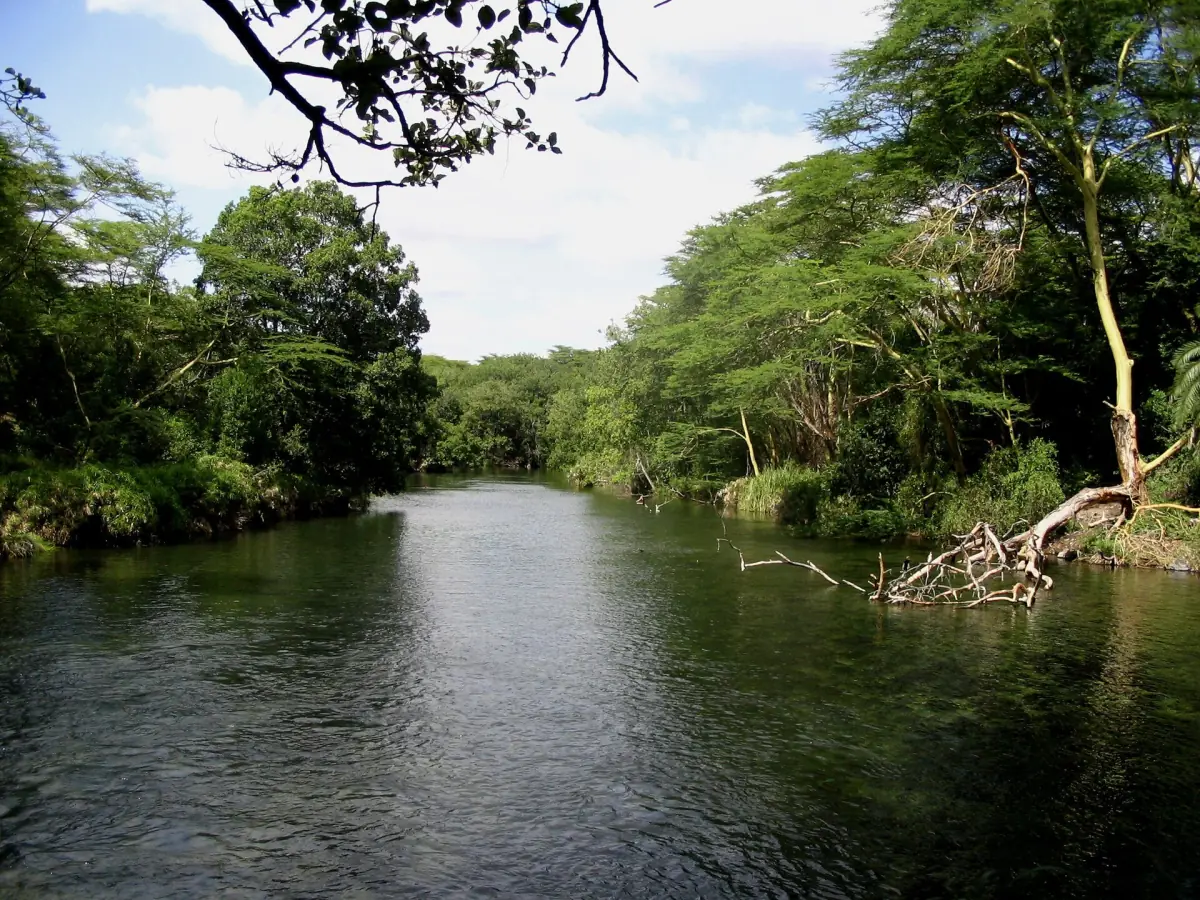
Tsavo West
Hills, lava, springs and the Tsavo River.
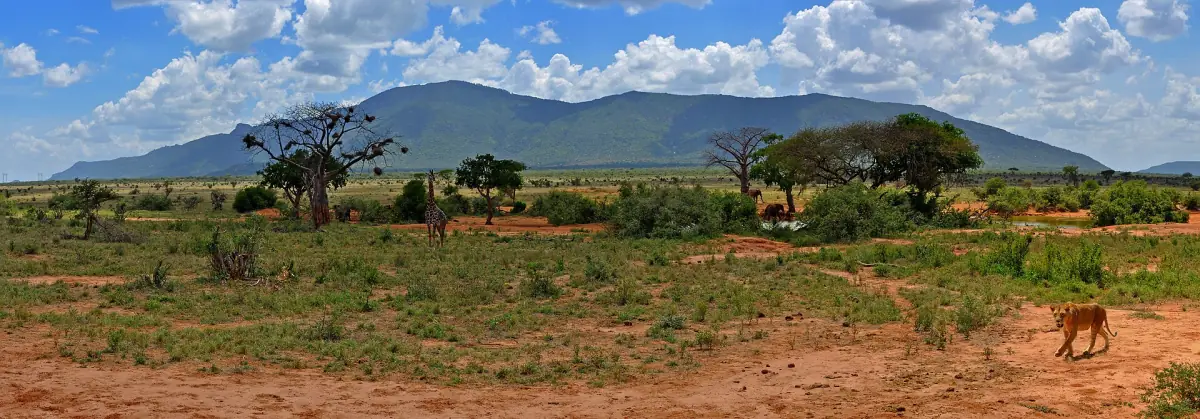
Tsavo East
Open plains, Galana River and Mudanda Rock.

Madaraka Express and roads
Trains to Voi and Mtito Andei and the park gates.
Tsavo East covers about 13,747 km² and Tsavo West about 9,065 km². Park gates open at 06:00 and close at 18:00 unless you stay overnight. The tariff in force since 1 October 2025 charges non-resident adults $80 per park entry and non-resident children $40, valid for up to 24 hours. A Tsavo East ticket is not a Tsavo West ticket, so check the Tsavo park fees before you plan a route through both. The speed limit in the parks is 40 km/h, and you keep at least 20 m from animals.
Man-eaters of Tsavo: frequently asked questions
Who were the man-eaters of Tsavo?
They were two maneless male lions that attacked people in 1898 at the site of a railway bridge over the Tsavo River. Lt. Col. John Henry Patterson, the chief engineer, shot both at the end of that year.
How many people did they kill?
Estimates range from about 35 to 135. A 2009 isotope study estimated about 35 people eaten, and Patterson claimed 135. Neither is an exact count of all deaths.
Where are the lions now?
They are preserved at the Field Museum in Chicago. The mounted lions are in a diorama and the skulls are shown in an exhibition.
Is the film The Ghost and the Darkness accurate?
It was made in 1996 and is based on the story. The lions in the film have manes, while the historical animals were maneless, so use the film for atmosphere and not for facts.
Is this the official site of Tsavo or the Kenya Wildlife Service?
No. This is an independent guide. It is not run by the KWS, the Field Museum or any safari operator, and prices are given as listed for 2026.