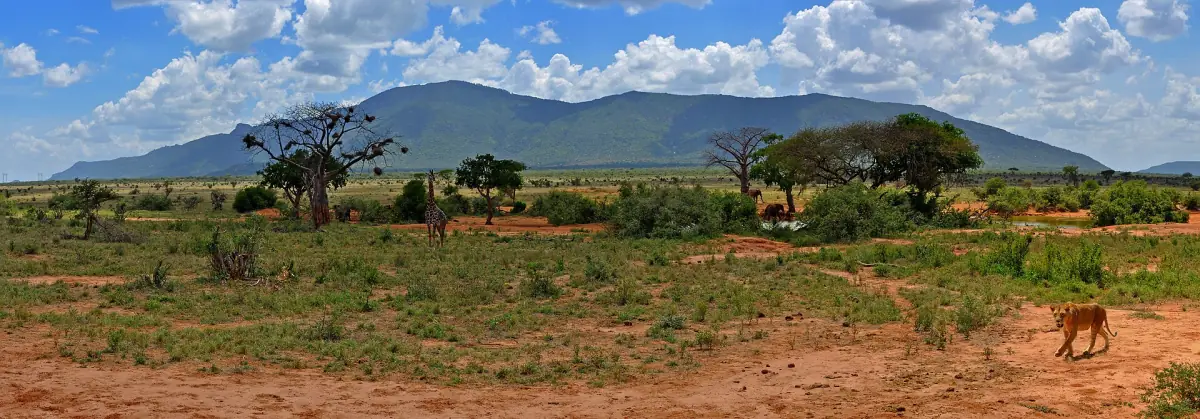
Tsavo weather at a glance
Tsavo East and Tsavo West sit in a hot lowland. Daily highs in the historical figures for Voi stay between about 28 and 33 °C in every month, and the lows between about 17 and 21 °C. The big difference between months is rain, which falls mostly in two seasons and is close to nothing in the middle of the year.
There is no single best month for Tsavo, and no fully rain-free season. The right dates depend on what you want from the trip. If you are still choosing a trip, our Tsavo safari tours are a good starting point, and the Tsavo East or West page explains the park choice. This page covers Tsavo only, not Kenya as a whole.
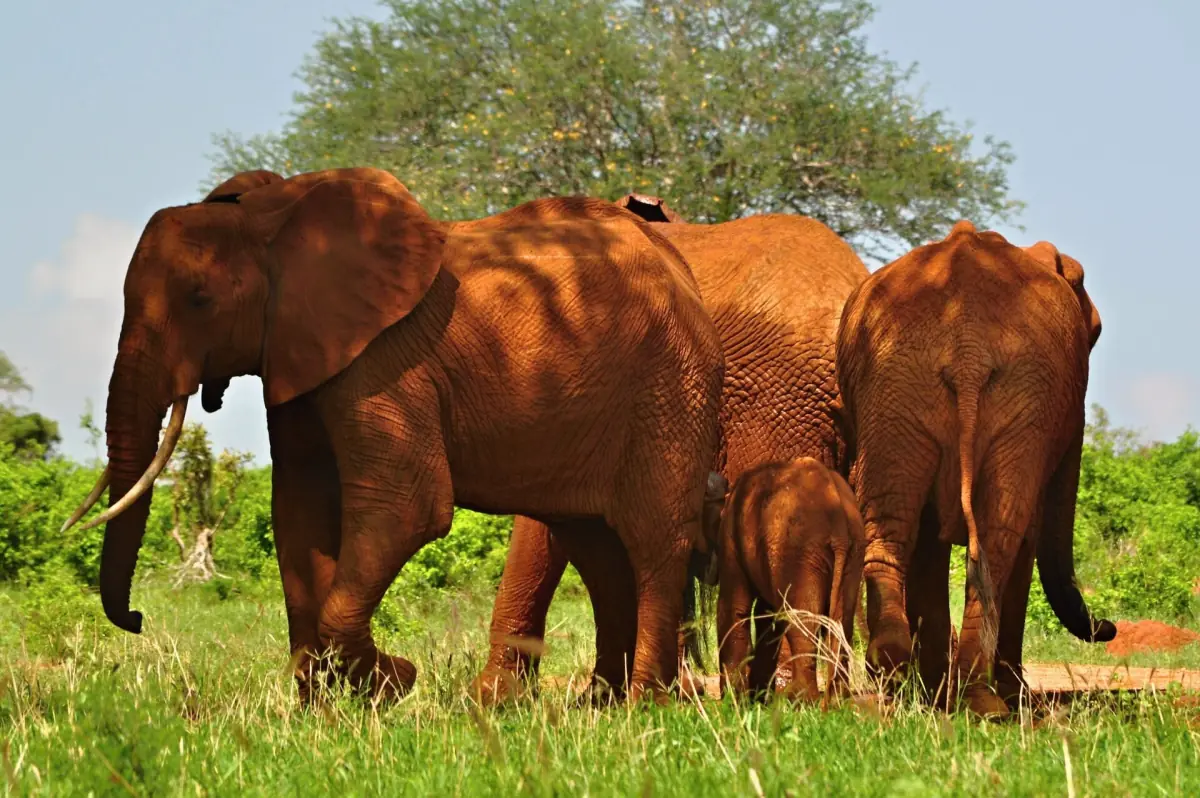
Tsavo weather month by month
Historical averages for Voi, from records up to 1980. Highs and lows are mean daily values, not records. A dash means no figure is available.
| Month | Average high | Average low | Rain |
|---|---|---|---|
| January | 31.6 °C | – | 34 mm |
| February | 32.9 °C | 20.2 °C | 29 mm |
| March | 33.3 °C | 20.8 °C | 79 mm |
| April | 31.8 °C | 20.4 °C | 100 mm |
| May | 29.9 °C | 20.0 °C | 30 mm |
| June | 29.0 °C | 18.3 °C | 6 mm |
| July | 28.1 °C | 17.5 °C | 3 mm |
| August | 28.0 °C | 17.2 °C | 8 mm |
| September | 29.2 °C | 17.6 °C | 15 mm |
| October | 31.1 °C | 18.9 °C | 26 mm |
| November | 31.4 °C | 20.1 °C | 106 mm |
| December | 30.6 °C | 20.4 °C | 119 mm |
These are old averages, so today's weather can differ. Voi lies in the lowland of the east. Tsavo West is hillier, and the Taita Hills rise to Vuria Peak at 2,208 m, so treat the numbers as a guide only. For the coast, see the coast weather guide.
Our pick: a two-day Tsavo East safari
This two-day trip from Malindi or Watamu has the park fee in the price, so you know the entry cost before you go.
Hand-picked tours, booked through GetYourGuide. Prices are indicative starting prices in US dollars (as of October 2026). Tap a tour for live availability and the current price in your currency.
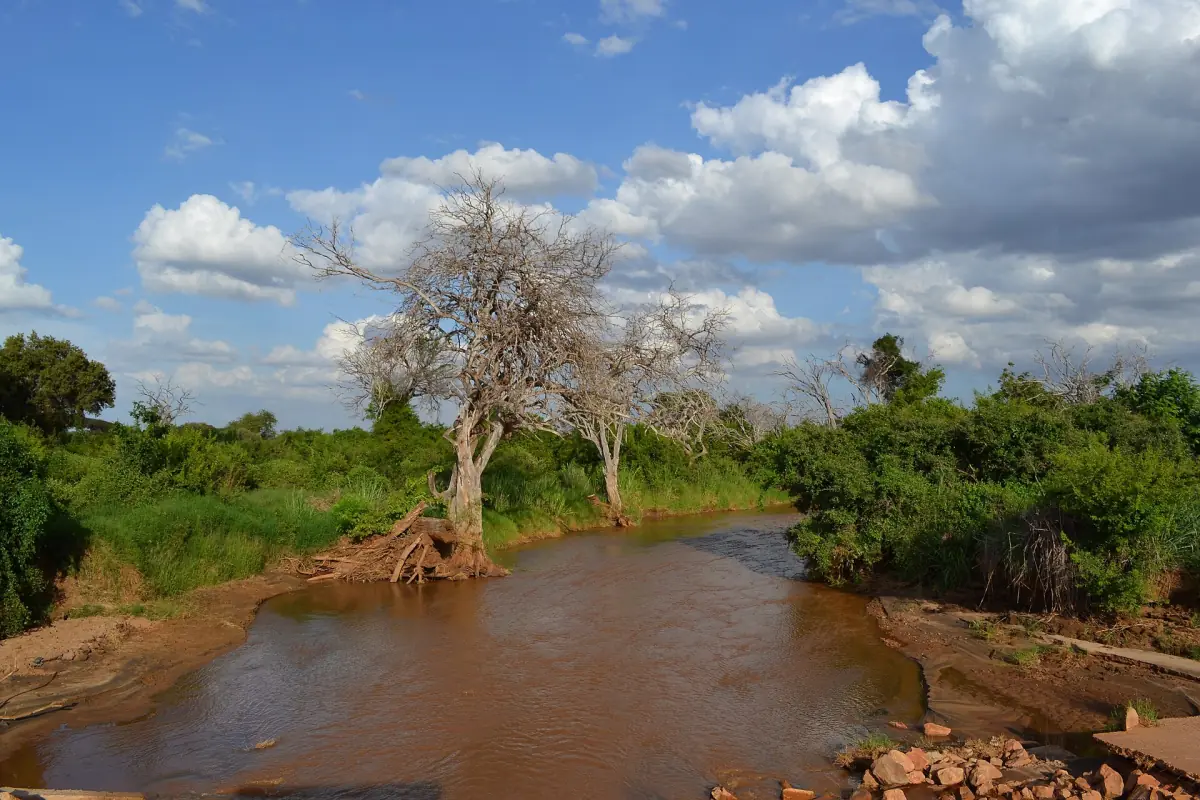
Tsavo safaris and day trips
Game drives in Tsavo East and Tsavo West, from day trips to multi-day safaris, with live prices and availability.
Rainy seasons in Tsavo
Around the Taita Hills the long rains fall from March to May and the short rains from October to December. For Kenya as a whole, the long rains run from late March to mid-June and the short rains from October to November, so allow some variation from year to year. The Voi figures agree with this: April (100 mm), November (106 mm) and December (119 mm) are the wettest months.
Rain does not start on a fixed date in every year, so a season is a pattern and not a promise. Government travel advice warns that the short rains can bring floods, landslides and road damage. Check your route before you travel.
Best time to visit Tsavo
Choose by what matters most to you.
The driest months
At Voi, June to September average 15 mm of rain or less per month, with July the driest at 3 mm. January and February are lighter than the long rains too, at 34 and 29 mm. These months suit most safari plans.
The long rains
March and April are the wettest months of the first half of the year, with April at 100 mm and March at 79 mm. Expect rain, and ask about tracks before you set a tight route.
The short rains
November and December are the wettest months in the Voi figures. October is still lighter at 26 mm, which makes it a lead-in rather than a peak.
Fees do not follow the season
The tariff in force since October 2025 has no separate peak-season rate for Tsavo. Non-resident adults pay $80 per entry for 24 hours (2026), and children and qualifying students pay $40.
Tsavo park fees →Wildlife sightings are never guaranteed, and a dry month does not promise a particular animal. For most visitors, the drier months from June to September are a safe default. Travellers who prefer less rain should avoid April, November and December.
Plan the rest of your trip
Weather is one part of the plan.
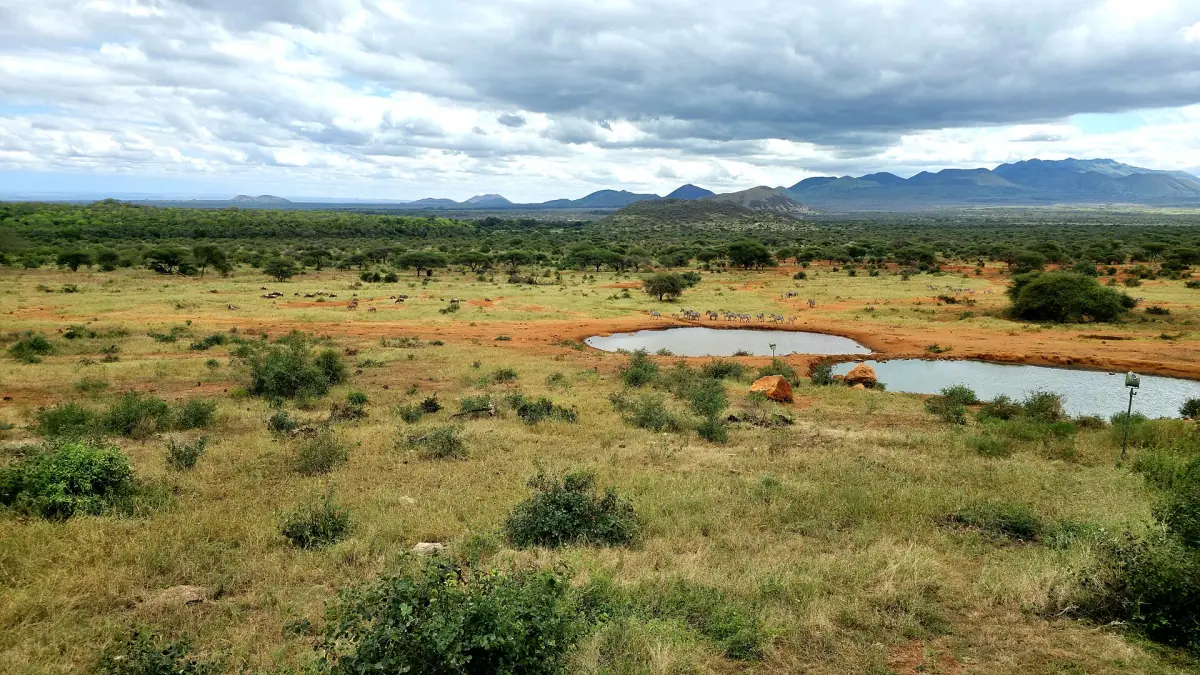
Tsavo weather: frequently asked questions
When is the best time to visit Tsavo?
There is no single best month. In the historical Voi figures, June to September are the driest months. The wettest are April, November and December. Pick the dates that fit your plans.
When are the rainy seasons in Tsavo?
Around the Taita Hills the long rains run from March to May and the short rains from October to December. For Kenya as a whole the long rains run from late March to mid-June and the short rains from October to November, so the exact start varies.
How hot does it get in Tsavo?
In the historical Voi figures the average daily high is between about 28 and 33 °C, with March the warmest at 33.3 °C. The average low is between about 17 and 21 °C.
Is the weather the same in Tsavo East and Tsavo West?
Not exactly. The Voi figures describe the lowland in the east. Tsavo West is hillier, so use the numbers as a guide and check the forecast close to your date.
Are park fees higher in the dry season?
No. The current tariff for Tsavo has no separate high-season and low-season rates: $80 for non-resident adults per entry for 24 hours (2026).
Is this the official site of the KWS or a weather service?
No. This is an independent travel guide. It is not the official website of the Kenya Wildlife Service (KWS), Kenya Railways or Taita-Taveta County, and it is not connected to any safari operator or lodge.